
Reflections from scoping work in Kenya
Negotiating Access and Seeing Adaptation Up Close: Reflections from Scoping Visits on Locally Led Adaptation Projects in Kenya
Accountable Adaptation Research Fellow and BIEA Researcher Benard Musembi reflects on the initial stages of fieldwork in Kenya as he visits counties to discuss their approaches to monitoring and evaluation adaptation.
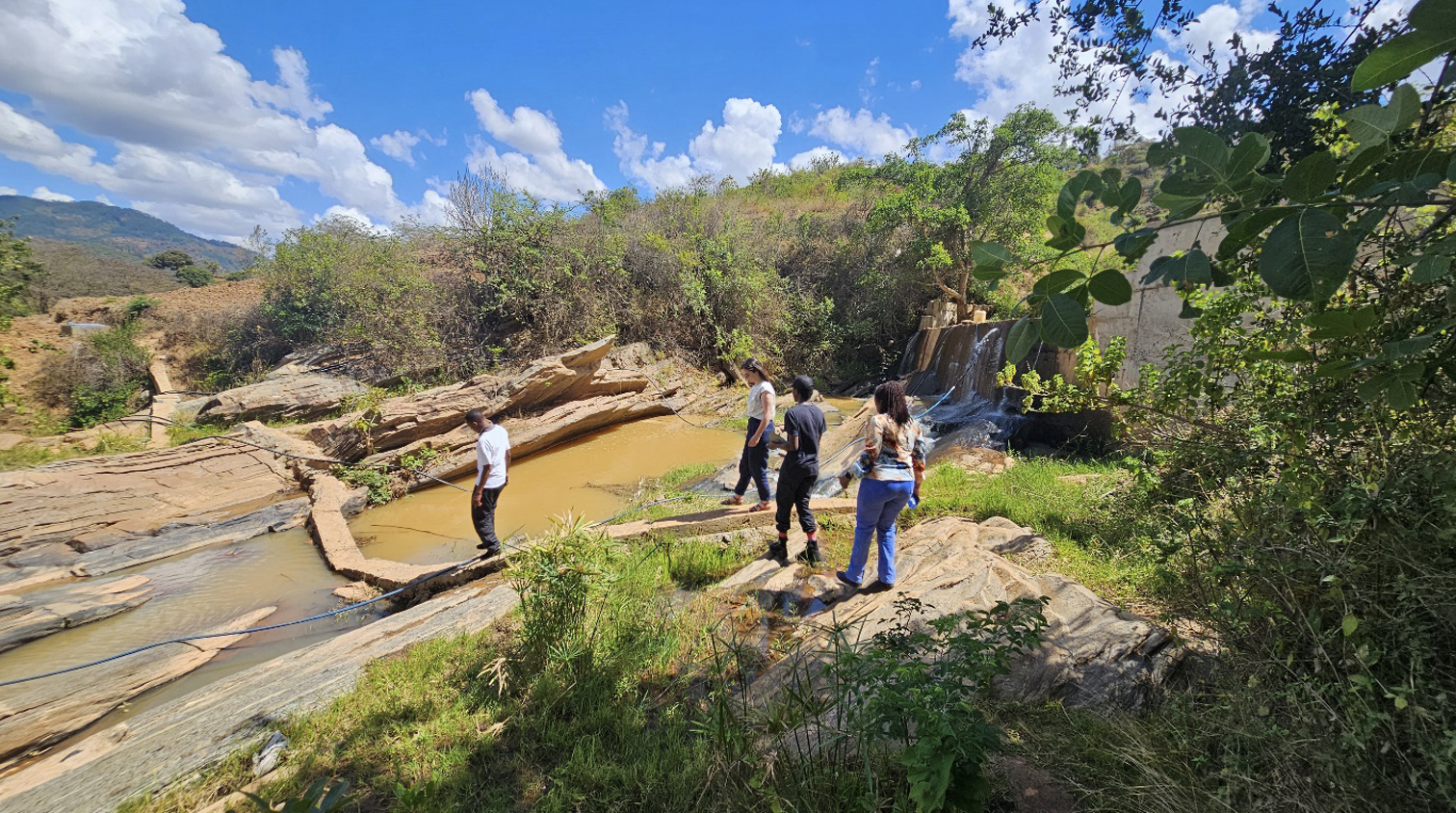
Team visit to local project sites
One of the most important stages of climate research often doesn't appear in final reports or academic publications. This is the period when researchers negotiate access, conduct scoping visits, and begin to understand how adaptation governance functions before their formal data collection starts. As part of the Accountable Adaptation research programme, we - Kennedy Gitu, Benard Musembi, and Susannah Fisher - have been conducting a series of scoping visits across selected counties in Kenya to examine how locally led adaptation is being designed, governed, and experienced in practice in the country. We are exploring a flagship project known as Financing Locally-Led Climate Action (FLLoCA). So far, these visits have included Makueni, Kitui, Vihiga, and most recently, Kilifi County.
The scoping visits were designed as a methodological step to build relationships with county stakeholders and visit adaptation project sites. This is now guiding our site selection and research design for more detailed future fieldwork.
Negotiating Access as a Research Process
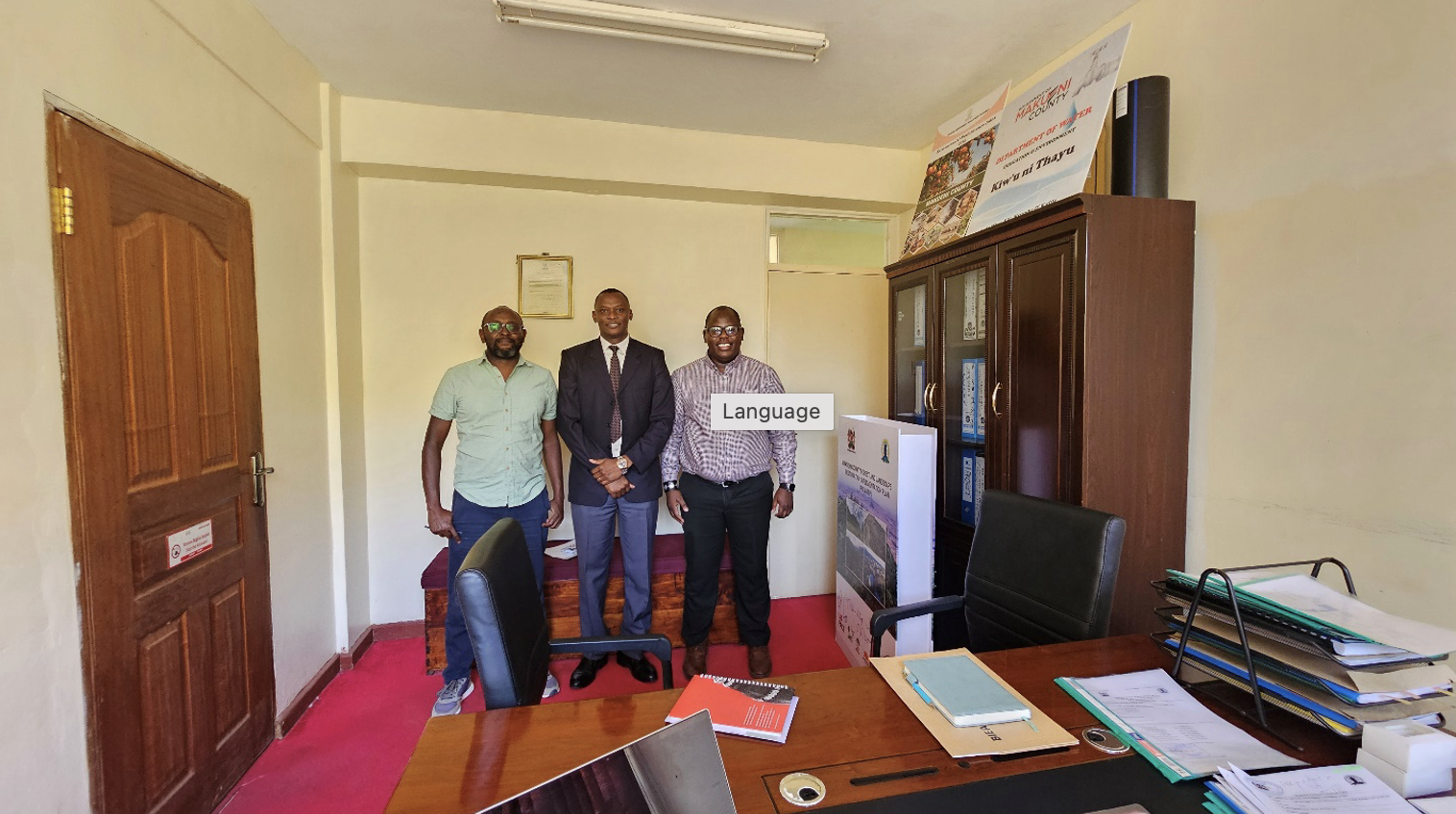
Courtesy call to the Chief Officer, Makueni County
Gaining access to county governments is a substantive component of the research process requiring formal letters and endorsement by senior officials. For us, this is key because county governments are central stakeholders within the FLLoCA programme. In practice, access often began with courtesy calls that quickly developed into substantive discussions on climate finance, performance, and institutional identity. Counties such as Makueni, Kitui, and Vihiga talked about their engagement in the national FLLoCA system, and all these counties have been ranked highly in recent performance cycles.
Our focus is on monitoring and evaluiation of adaptation efforts. This meant we focused our questions on how officials complied with minimum access conditions, how they met performance benchmarks, and the audit and verification processes associated with disbursement. These conversations highlighted that locally led adaptation is shaped by how subnational governments navigate funding rules and upward accountability to national agencies and donors.
Adaptation looks different in different places
Field visits in Makueni, Vihiga, and Kilifi took us across different socio-ecological settings. In Makueni, for example, we moved from the highland areas of Kilome and Kaiti, characterized by steep terrain and relatively cooler conditions, to the lowland plains of Masongaleni, where aridity and water scarcity are more pronounced. Across these landscapes, we visited a range of FLLoCA-supported interventions, including water supply projects, sand dams, agricultural demonstration farms, apiaries, and commercial tree nurseries. The projects shared a common objective of strengthening livelihoods and enhancing community resilience in the face of climate variability.
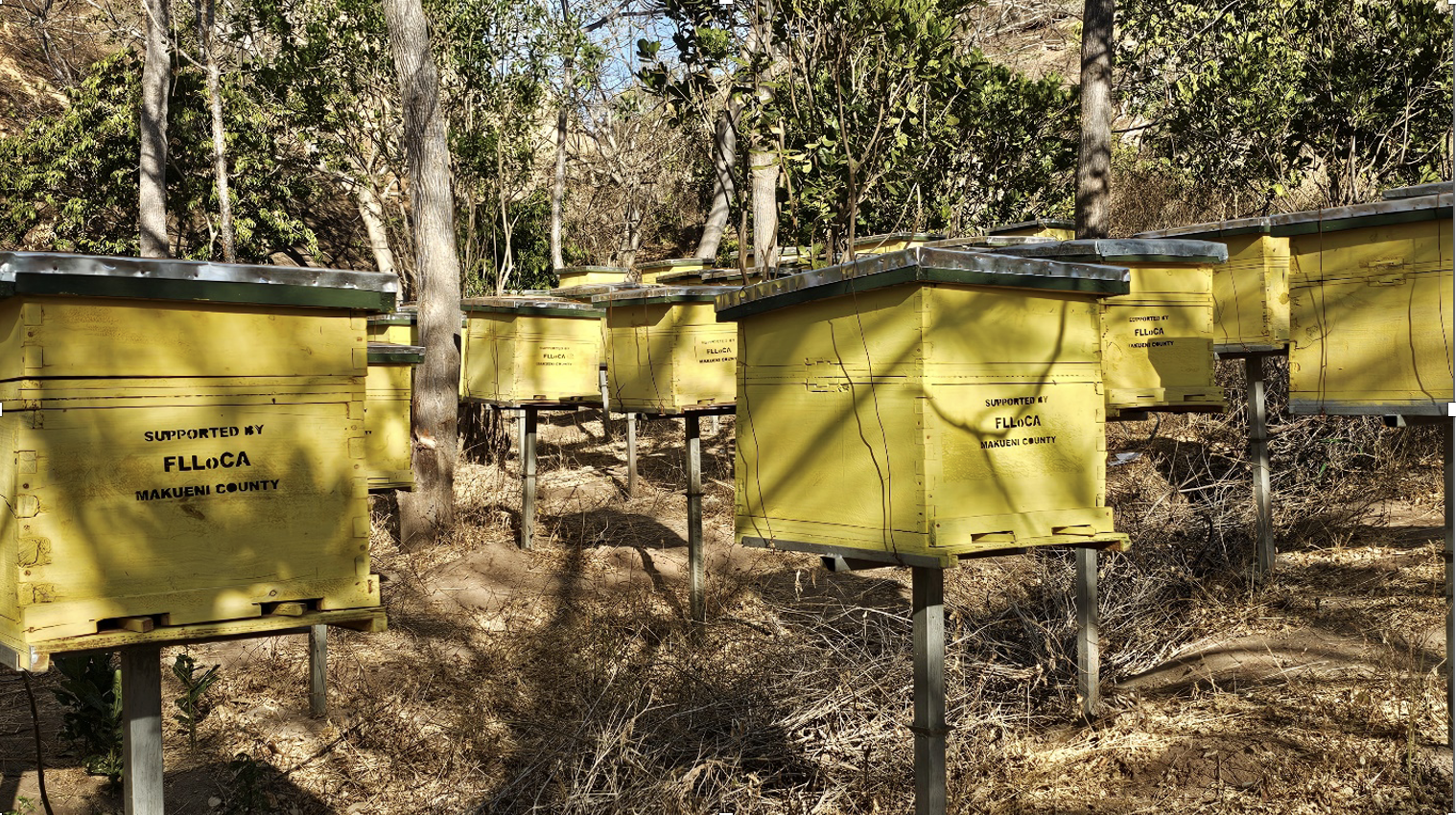
An Apiary in Makueni
In Makueni in the scoping visit we saw a deliberate strategy centered on integrated adaptation projects. County officials and community members described the work as these sites as part of conscious efforts to move beyond single-sector interventions towards more holistic responses to climate vulnerability. Water infrastructure was routinely linked to agricultural production, income-generating activities, and environmental restoration, reflecting a shared understanding of climate risk as multidimensional rather than confined to discrete sectors. Sand dams were connected to irrigation and model farms, water supply systems supported health facilities and livelihoods, and environmental rehabilitation was embedded within broader development objectives.
Next steps
The most important lesson from these scoping visits is methodological. Scoping is a time to test assumptions and build relationships. Important ideas emerged through observing the projects in practices and informal reflections from the officials and community members as we chatted. Now we move into more intensive data collection across a wider range of counties in the coming months, these early reflections will continue to guide our approach.