
Fellowship Interview with Danley Colecraft Aidoo.
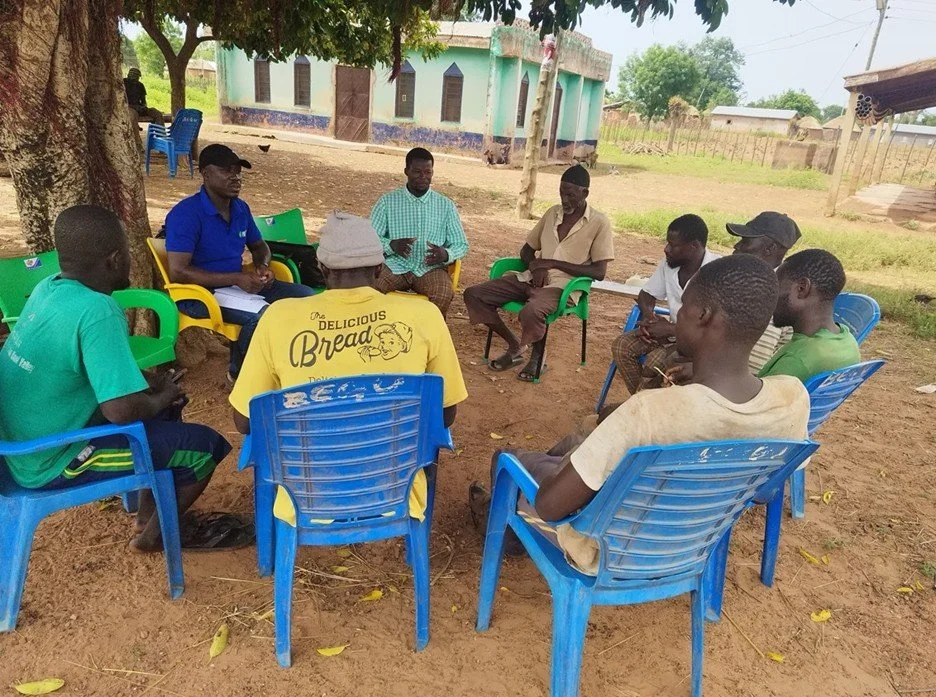
The following interview is the first in the series of seven blogs with the Accountable Adaptation Fellows about their research and fellowship experience. The interviews were all conducted by Susmita Puri (Accountable Adaptation).
Danley Colecraft Aidoo is a lecturer in the Department of Agricultural extension at the University of Ghana. His research looked at the informal practice of peer-knowledge sharing among farmers in the Ashanti Region of Ghana.
Q: Tell us about yourself?
A: My name is Danley Colecraft Aidoo. I am a lecturer in the Department of Agricultural Extension at the University of Ghana. My work revolves around teaching, research, and community service. I lead courses on climate change adaptation, entrepreneurial skills in agriculture, and sustainable livelihoods and development. My research focuses primarily on climate change adaptation, particularly its effects on sustainable development and the livelihoods of rural communities. This interest stems from the fact that, in West Africa, agriculture is a key economic driver and is deeply rooted in rural areas. Smallholder farmers make up the majority of our agricultural workforce. They are often poor and resource-constrained yet disproportionately affected by climate change.
If we want to grow our economies, as individual countries and as a sub-region, we must strengthen rural communities' adaptive capacity. It is this belief that guides my research and shapes my teaching philosophy. In my work, I am equally committed to inclusivity. Sustainable development cannot be achieved if certain groups are left out. When people feel excluded, policies and strategies often appear imposed from above. True, long-lasting development requires that everyone is involved and feels ownership of the process.
Q: Tell us about your research under the AA Fellowship. What was its aim and focus?
A: My research sought to understand what accountability means for communities and beneficiaries in rural climate adaptation projects. I took an unconventional approach by examining formal accountability frameworks and their effects on beneficiaries, focusing on real-life experiences and how institutions are held accountable. At the same time, I wanted to make theoretical contributions by asking whether accountability is single-dimensional or multidimensional. Reading the Accountable Adaptation paper particularly piqued my interest, and I wanted to understand what shapes accountability in practice. On paper, accountability seems straightforward, but I wanted to see how it actually works and how this should inform policy. My research was conducted in northern Ghana through the AICCRA project. I chose this region because it faces some of the harshest climate conditions in the country, produces many of Ghana's staple crops, and is heavily impacted by climate change.
Q: What are your key learnings about accountability in adaptation?
Horizontal Accountability
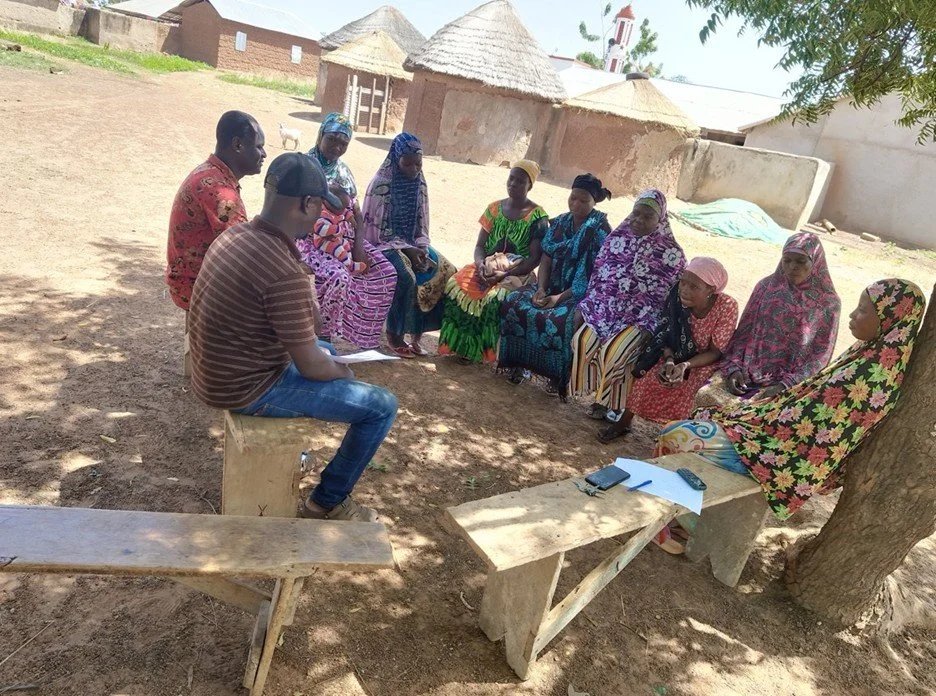
The first key lesson I learnt from my research is that horizontal accountability is perhaps the strongest form of accountability, yet also the most misunderstood. In the communities I studied, the most active accountability processes occurred through peer monitoring, informal sanctions, and knowledge sharing among farmers. These practices created cohesion and strong ownership. However, horizontal accountability is misunderstood because it can also create systems of discipline where farmers enforce behaviours aligned with project goals, and sometimes local rules are used to advance external priorities. This means horizontal accountability isn't always bottom-up; it can become a way for outside agendas to be enforced from within the community itself.
Transparency
The second lesson was about transparency. I found that transparency increases beneficiaries' agency even more than formal power. For example, when farmers had regular access to extension offices and project implementers, accountability was strongest; they felt able to question, negotiate, and influence decisions. But this was mostly at the lower level. When they had to reach higher-level decision-makers through intermediaries, downward accountability weakened, feedback loops failed to function well, and the influence of their voices was diluted. This highlighted that transparency is a key determinant of true accountability in climate adaptation projects.
Responsibility
The last lesson I’d like to share is about responsibility shifting without power. Even when peers were monitoring participation and sustaining project practices, they often had little influence over decisions about resources and priorities. Yet some beneficiaries actively enforced rules, such as ensuring attendance at meetings and adherence to project practices, even though they didn’t control the resources themselves. This made me realise that when we talk about upward, downward, and horizontal accountability, we need to be cautious: responsibility can be shifted without actually transferring power.
Q. Based on your experience, what message would you like to share with adaptation funders and policymakers?
Funders
My message is that adaptation projects can only be truly accountable if they start treating beneficiaries as partners in decision-making. As a funder, your investment should not only focus on technologies or training. Funding should also support structures that enable upward accountability, allowing communities or beneficiaries to question decisions, shape priorities, and influence resource use. This moves beneficiaries from being mere recipients, to co-owners of adaptation processes.
Policymakers
My key message is that in designing accountability systems, policymakers should focus on how adaptation interventions are designed. While many policies emphasise participation, policymakers need to ensure that accountability mechanisms are reciprocal, both at district and national levels. Beneficiaries should have clear, accessible channels to influence planning, budgeting, and implementation. This would ensure that beneficiaries are engaged in more than just monitoring, but also important project decisions.
Q: How has your experience been working with other AA fellows?
A: The best thing was the way they stretched my thinking. I remember when the final list of fellows came out, I saw what everyone was working on and realised that, although all our projects focussed on accountability, we were exploring it from very different angles. For example, Simba’s focus on child-driven accountability challenged our assumptions. He made us think about voice differently, highlighting that certain groups can be excluded from adaptation processes without us even noticing. Franklin, who used theatre and local cultural expression to show how creative arts can open up safe, honest conversations, pushed me to think differently about communication in adaptation and how it is not just about sharing information, but can be an emotional and cultural process.
Throughout the write shop in Nairobi, working with all the fellows made me realise that we weren’t just working alongside each other, we were constantly shaping each other’s thinking, as evident in the cross-cutting analyses we conducted together. For me, this was the most beautiful part, working with everyone and engaging with their perspectives; it’s something I won’t forget