
How does the monitoring and evaluation of an international project work in practice? Field Reflections from Nepal’s Churia Region
Author: Susmita Puri
In December 2025 Susmita Puri and Biraj Adhikari conducted some fieldwork on how the M&E of a Green Climate Fund project is working in practice. This blog is their reflections from that trip.
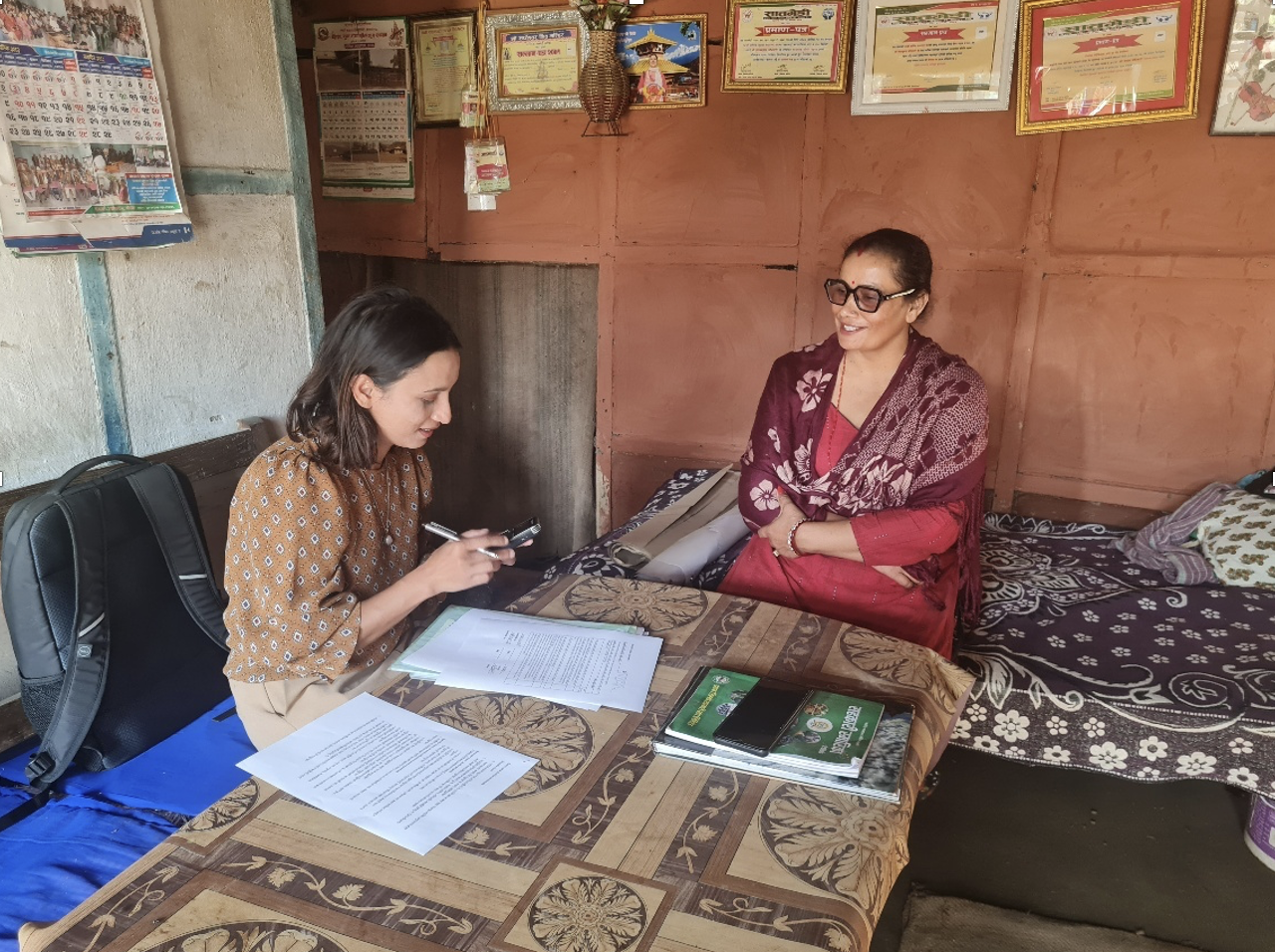
Interview with a farmer in Damak, Jhapa
The Building Resilience in the Churia Region of Nepal (BRCRN) project works on creating an integrated approach to ecosystem restoration, particularly forests, as well as addressing land-use needs and local livelihoods in Churia. The Churia region lies between the high mountain areas in the north and the southern plains. The region is increasingly exposed to extreme heat, water stress, wildfire, soil erosion and flooding due to climate change. It is a joint initiative of the Government of Nepal (GoN), the Green Climate Fund (GCF), and the Food and Agriculture Organization (FAO).
We are currently conducting research to understand how the monitoring and evaluation of adaptation projects works in practice, with what effects. In this context, we conducted fieldwork in December across Koshi and Madhesh Provinces. Our fieldwork focused on understanding how the project is being implemented at the local level, and how results practices and other forms of knowledge about the project outcomes are produced, and the processes that shape these. During the visit, we engaged closely with local implementing actors, community members, and Community Forest User Groups (CFUGs) and other community-based organisations. We conducted interviews, observed multiple project sites, and participated in a Farmer Field School alongside field facilitators and farmers.
Setting off
The field visit began at the Provincial Project Management Unit (PPMU) in Itahari, Sunsari District, Koshi Province. Following our discussions there, we travelled further east and deeper into the Churia range, visiting several intervention sites across Koshi Province. After completing the fieldwork in Koshi, we returned to Madhesh Province to conclude the final phase of data collection for this cycle.
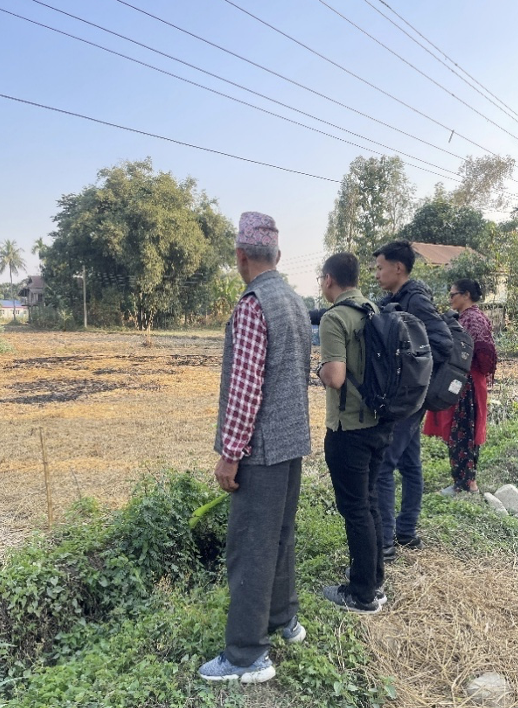
Observation of demonstration plots in Damak, Jhapa
Travelling across provinces and districts made the geographical scale of the BRCRN project tangible to us. The project spans vast and diverse landscapes, and the implementing staff oversee multiple sites and activities across this area. We were accompanied by the implementing actors to various project sites, which allowed us to closely observe how interventions are carried out and how their impacts are perceived, both by those implementing the project and by the intended beneficiaries. These visits highlighted the complexity of delivering the layered realities of adaptation work.
Multiple strands, one objective
One of the things that became most visible during the field visit was how the BRCRN project comes together in practice with three distinct strands of work, with multiple actors working on different pieces of the puzzle. We saw three main types of interventions across the sites. In some locations, farmers were gathering regularly for Natural Resource Management-Farmers’ Field Schools (NRM-FFS), where discussions focused on land management practices, organic farming techniques, sustainable use of natural resources, etc., through 18-month learning cycles. On the other hand, Local Resource Persons (LRPs), another set of ground-level project implementers, were working closely with CFUGs. LRPs collected information on community forests through the user committee, walked the community forest areas together, discussing governance practices, and jointly identifying priorities for climate-resilient land use planning. At another location, we visited sites where physical infrastructure, such as recharge ponds and river embankments, were being built through user committees directly supported by the Provincial Project Management Unit.Seeing these different interventions unfold in parallel helped us appreciate the range of work that “building resilience” entails. Each component addressed a different dimension of livelihoods, forest governance, or physical protection from environmental risks, and at the same time, moving to the sites during the field visit made us aware of how adaptation work is often experienced in fragments, both by those implementing the project and by members engaged in specific activities.
Next Steps
Following this fieldwork, we are now starting additional data collection using interviews with the Project Management Unit at the central level. We are also working closely with others in the team to compare findings on similar projects in Kenya and Bangladesh.